

Undervalued Infrastructure Stocks
5 Economic Recovery Value Plays

The infrastructure sector represents one of the most compelling investment opportunities in 2025, combining essential economic function with unprecedented government support and technological transformation. As investors seek undervalued infrastructure stocks 2025 opportunities, a select group of companies trades at significant discounts to intrinsic value while positioning for massive economic recovery benefits.
The Biden Administration's $1.2 trillion Bipartisan Infrastructure Law continues driving historic investments across transportation, energy, and telecommunications infrastructure. Combined with private sector digitalization trends and AI-driven energy demands, the infrastructure landscape presents multiple value creation catalysts that sophisticated investors are beginning to recognize.
This comprehensive analysis examines five exceptional cheap infrastructure stocks trading at substantial discounts to fair value, representing different infrastructure subsectors with unique value propositions and recovery potential. From utility giants managing essential services to technology infrastructure providers enabling digital transformation, these companies offer compelling risk-adjusted returns for patient value investors.
Infrastructure Investment Renaissance: The 2025 Opportunity
Government Spending Catalyst
The Infrastructure Investment and Jobs Act (IIJA) represents the largest federal infrastructure investment since the Interstate Highway System, allocating $695 billion in announced funding across 74,000+ projects nationwide. This sustained government spending creates predictable revenue streams and growth visibility for infrastructure companies positioned to benefit from modernization initiatives.
Key Investment Areas:
Transportation Infrastructure: $284 billion for roads, bridges, and public transit systems
Broadband Expansion: $65 billion for high-speed internet access in underserved areas
Electric Grid Modernization: $73 billion for power grid resilience and clean energy transmission
Water Systems: $55 billion for drinking water and wastewater infrastructure improvements
Private Sector Digitalization
Beyond government investments, private sector digitalization drives unprecedented demand for technology infrastructure. AI workload acceleration, cloud computing expansion, and 5G network deployment create sustained growth opportunities for infrastructure providers across multiple subsectors.
Digital Infrastructure Drivers:
Data Center Demand: AI and cloud computing require massive computational infrastructure
5G Network Rollout: Telecommunications infrastructure expansion enables next-generation connectivity
Smart Grid Technology: Utility infrastructure modernization improves efficiency and reliability
Industrial Automation: Manufacturing and logistics digitization demands robust infrastructure platforms
The Five Value Opportunities
1. Pacific Gas & Electric (PCG): Utility Transformation Value Play
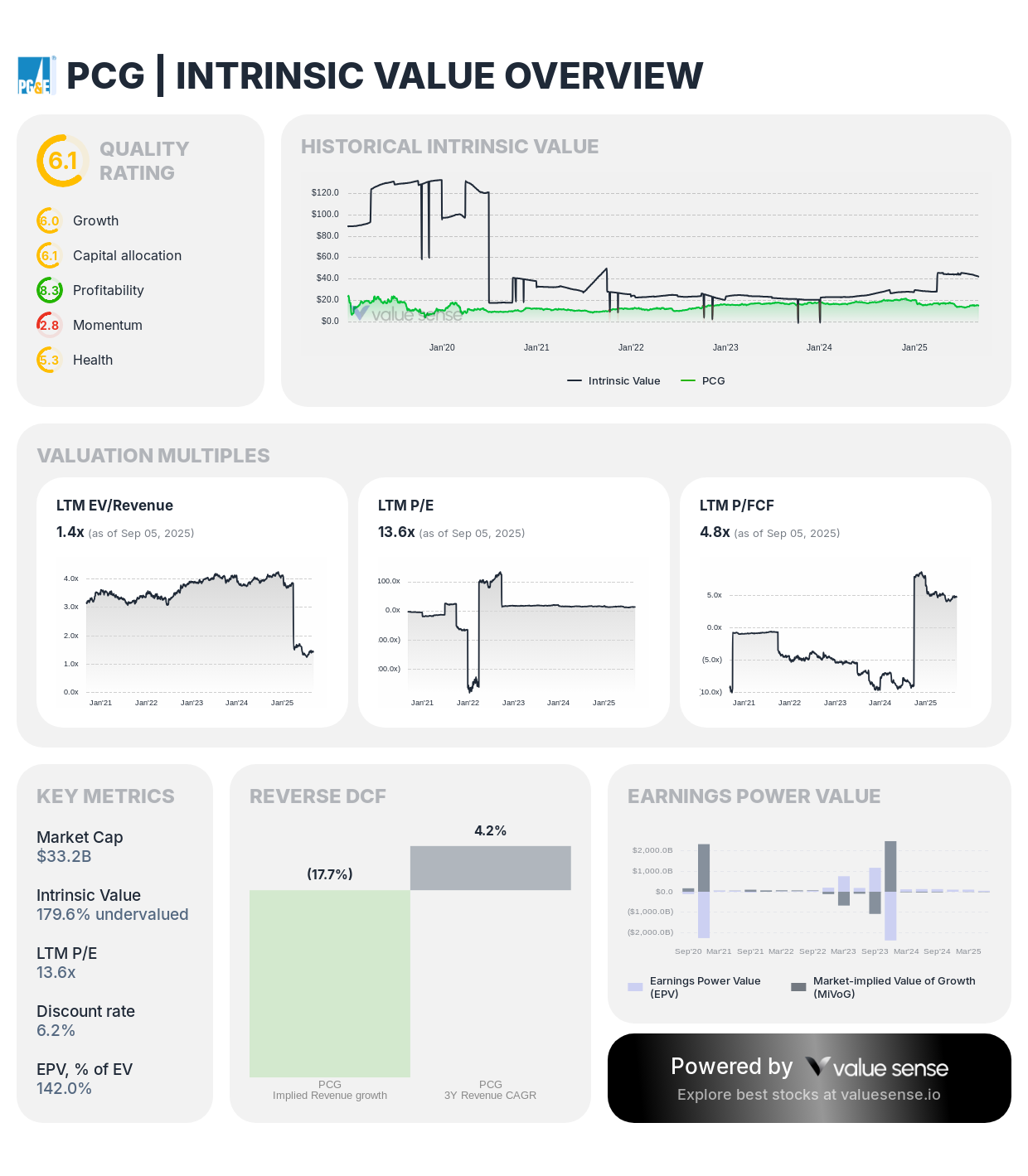
PCG demonstrates exceptional undervaluation at 179.6% below intrinsic value with strong cash generation and quality improvements
Company Profile: Pacific Gas & Electric operates as California's largest utility, serving 16 million customers across Northern and Central California through gas and electric distribution networks.
Value Proposition:
Extreme Undervaluation: 179.6% undervalued relative to intrinsic value
Quality Rating: 6.1/10 with improving operational metrics
Market Cap: $33.2 billion with substantial recovery potential
Cash Generation: $6.93 billion free cash flow with 28.3% FCF margin
Investment Thesis: PCG represents the most undervalued opportunity among infrastructure stocks, trading at a massive discount following bankruptcy resolution and operational improvements. The company's essential utility services, regulatory recovery mechanisms, and wildfire mitigation investments position it for sustained value creation.
Key Catalysts:
Wildfire Risk Reduction: Comprehensive mitigation programs reduce liability exposure
Rate Base Growth: Infrastructure investments generate regulated returns
Clean Energy Transition: California's decarbonization creates growth opportunities
Operational Excellence: Post-bankruptcy focus improves safety and reliability
Financial Strength:
Revenue Growth: 1.3% with stability from regulated operations
ROIC: 9.3% demonstrating effective capital allocation
Free Cash Flow: Exceptional 28.3% margin supports dividend restoration potential
Balance Sheet: Post-bankruptcy capital structure provides financial flexibility
→ PCG fundamentals & intrinsic value analysis
2. Enbridge (ENB): Energy Infrastructure Backbone
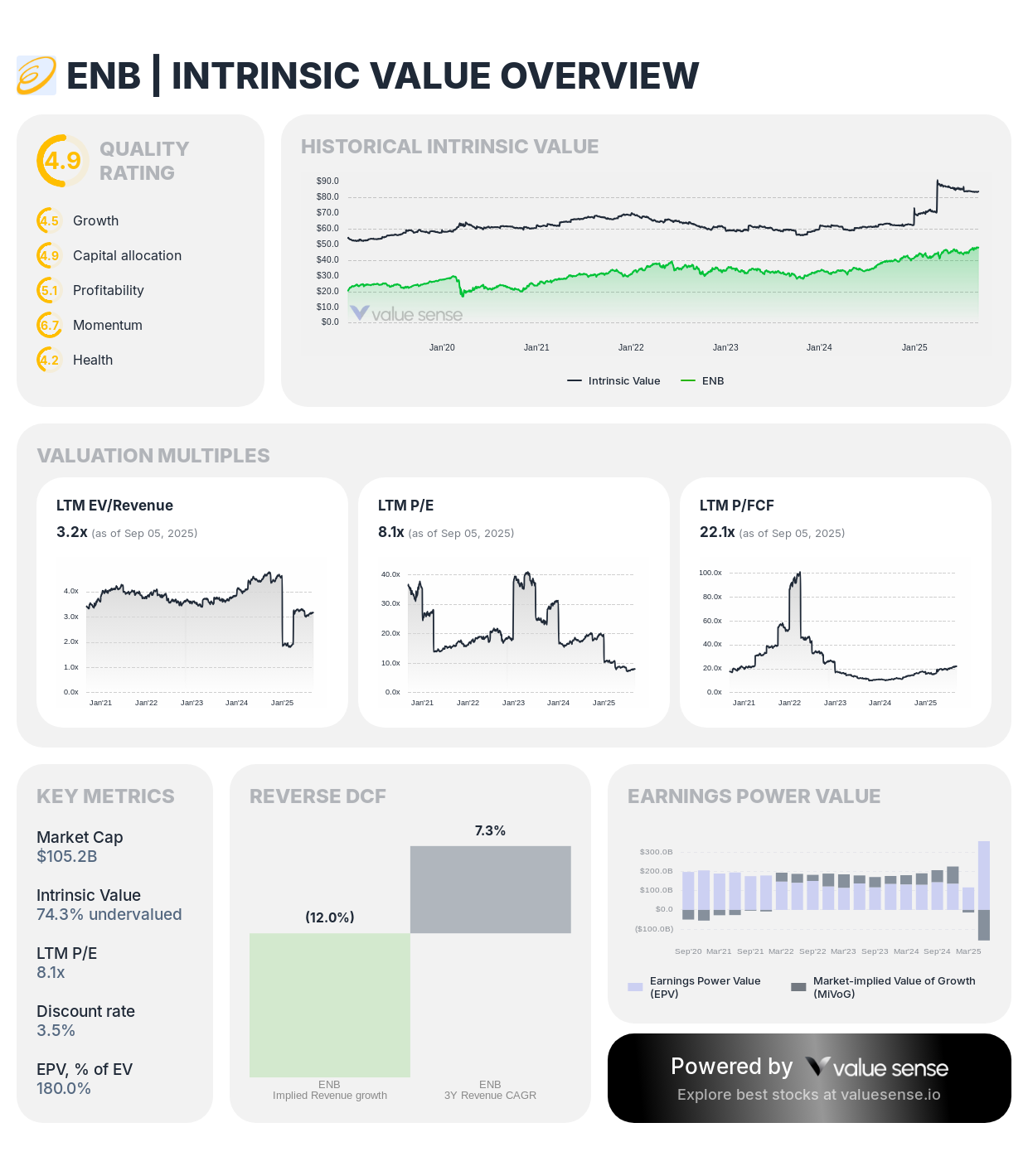
Enbridge shows 74.3% undervaluation with exceptional revenue growth and stable cash flows from diversified energy infrastructure
Company Profile: Enbridge operates North America's largest energy infrastructure network, including oil pipelines, natural gas distribution, and renewable power generation across the continent.
Value Proposition:
Significant Undervaluation: 74.3% discount to intrinsic value
Quality Rating: 4.9/10 with strong fundamental characteristics
Market Cap: $105.2 billion reflecting substantial scale
Revenue Growth: Exceptional 48.5% driven by asset expansion
Investment Thesis: ENB provides essential energy transportation and distribution services with regulated utility-like characteristics. The company's diversified energy infrastructure portfolio generates predictable cash flows while participating in North America's energy transition through renewable investments and natural gas expansion.
Key Catalysts:
Pipeline Network Expansion: Strategic acquisitions and organic growth projects
Natural Gas Demand: Increasing demand from power generation and industrial users
Renewable Energy Growth: Wind and solar development complements traditional assets
Dividend Aristocrat: 29-year dividend growth streak demonstrates cash flow reliability
Financial Excellence:
Revenue Scale: $14.9 billion with diversified revenue streams
Cash Generation: $4.76 billion free cash flow with 7.4% margin
ROIC: 6.7% on substantial asset base
Dividend Yield: Attractive income with sustainable payout coverage
→ ENB fundamentals & intrinsic value analysis
3. CommScope (COMM): Telecommunications Infrastructure Recovery
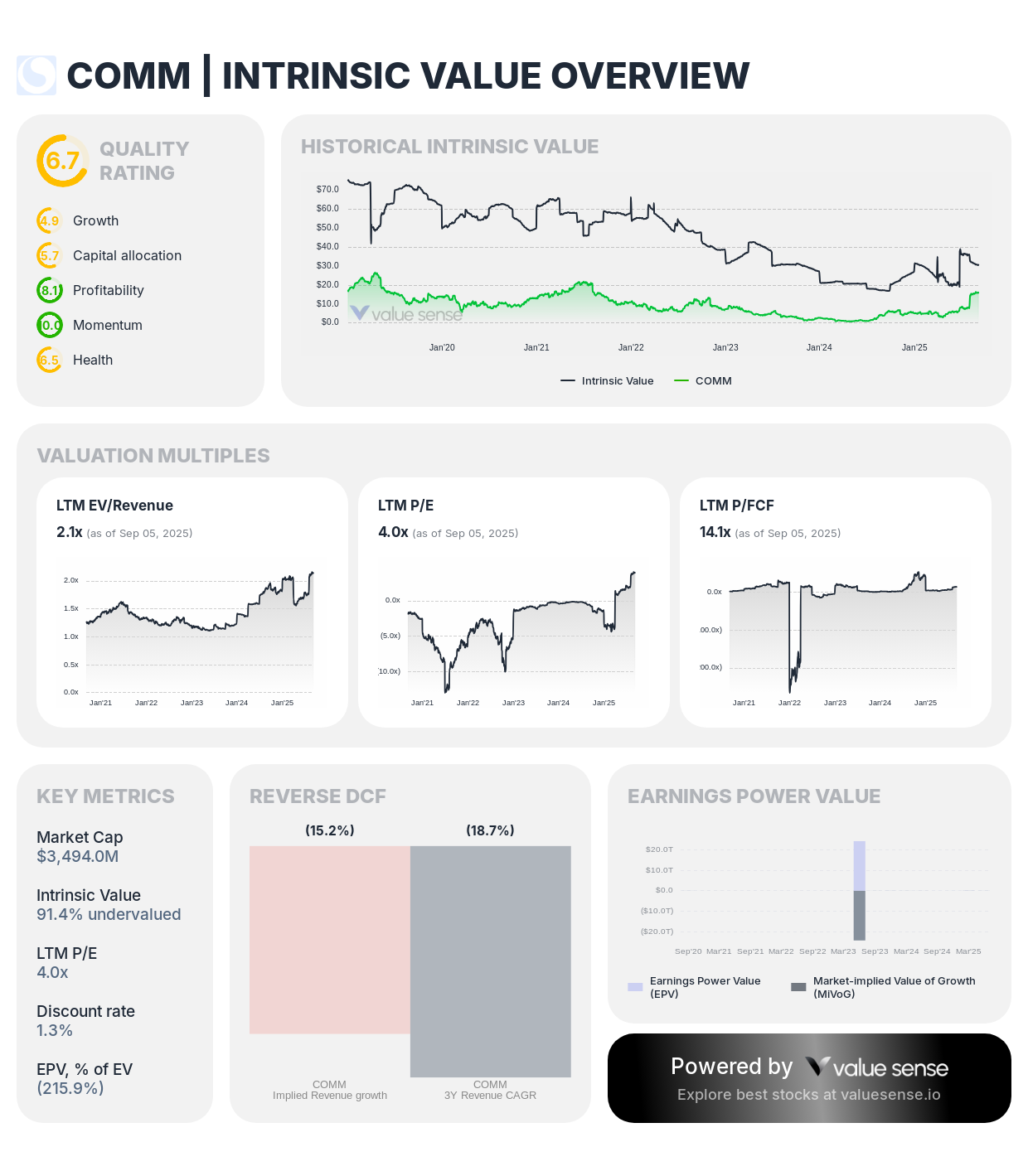
CommScope trades at 91.4% undervaluation with highest quality rating and positioning for 5G infrastructure buildout recovery
Company Profile: CommScope designs and manufactures infrastructure solutions for communications networks, including wireless, broadband, and enterprise connectivity technologies.
Value Proposition:
Deep Undervaluation: 91.4% below intrinsic value
Highest Quality Rating: 6.7/10 among analyzed companies
Market Cap: $3.49 billion representing recovery opportunity
Revenue Growth: Strong 11.0% expansion
Investment Thesis: COMM represents a classic value recovery play in telecommunications infrastructure. The company's leading position in network equipment and services positions it to benefit from 5G rollout acceleration, broadband expansion initiatives, and enterprise connectivity upgrades.
Key Catalysts:
5G Network Deployment: Accelerating infrastructure investments drive equipment demand
Broadband Infrastructure Act: Government funding supports rural connectivity expansion
Enterprise Digitalization: Corporate network upgrades create sustained demand
Operational Turnaround: Management focuses on profitability improvement and debt reduction
Operational Metrics:
Revenue: $1.39 billion with improving mix
Free Cash Flow: $248 million with 5.2% margin
ROIC: 4.7% with improvement potential
Balance Sheet: Debt reduction priorities support financial stability
→ COMM fundamentals & intrinsic value analysis
4. Otis Worldwide (OTIS): Vertical Transportation Infrastructure
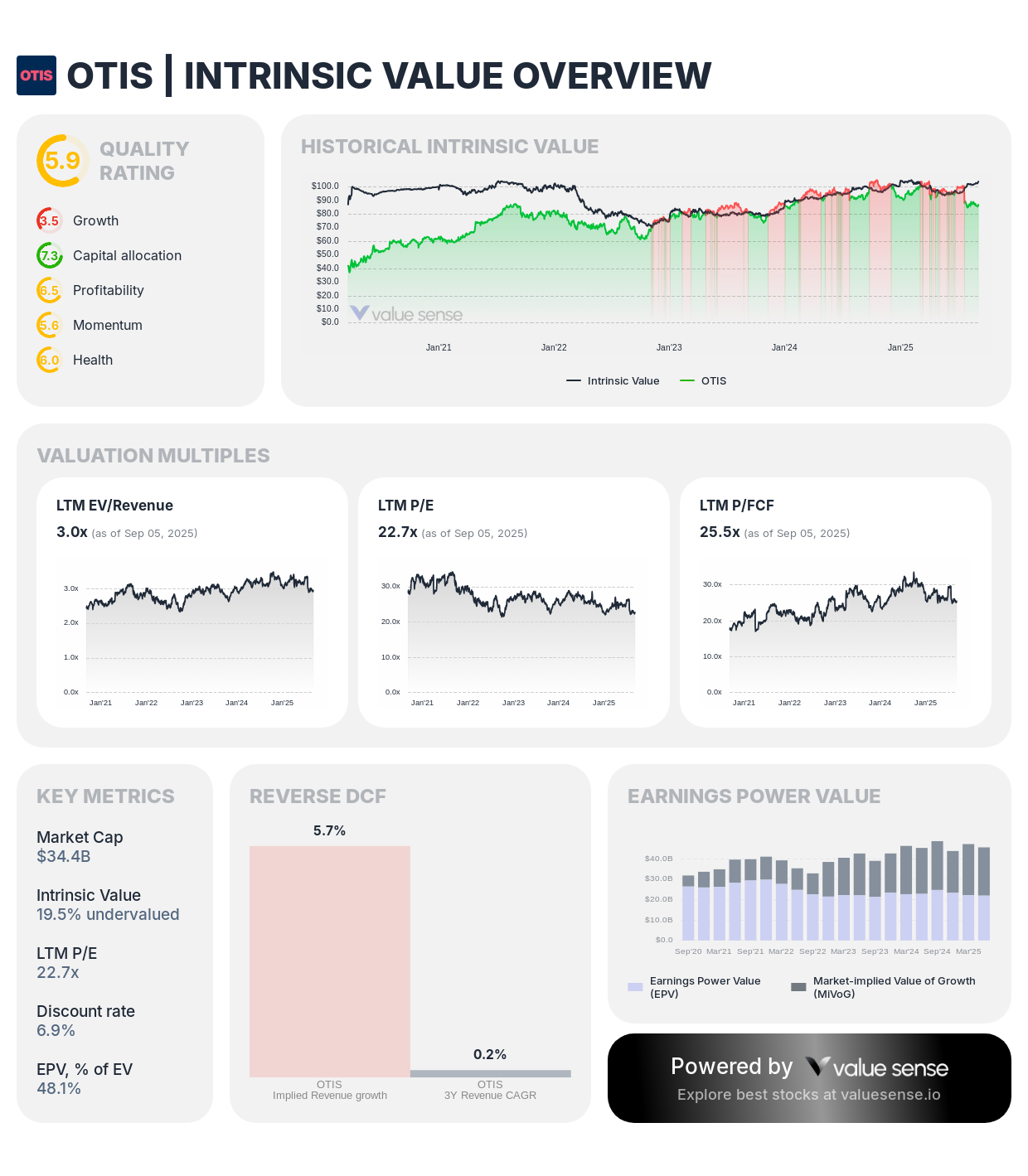
Otis demonstrates 19.5% undervaluation with exceptional 27.1% ROIC and stable service revenue model
Company Profile: Otis Worldwide manufactures, installs, and services elevators and escalators globally, serving residential, commercial, and infrastructure markets worldwide.
Value Proposition:
Conservative Undervaluation: 19.5% discount to fair value
Quality Rating: 5.9/10 with strong business characteristics
Market Cap: $34.4 billion in established market leader
Exceptional ROIC: 27.1% demonstrates capital efficiency
Investment Thesis: OTIS operates a unique infrastructure business model combining equipment manufacturing with high-margin maintenance services. Urban development trends, building modernization needs, and infrastructure investments drive sustained demand for vertical transportation solutions.
Key Catalysts:
Urbanization Trends: Global urban population growth drives elevator demand
Building Modernization: Aging infrastructure requires upgrades and replacements
Service Revenue Growth: Recurring maintenance contracts provide predictable cash flows
Technology Integration: Smart building systems create premium service opportunities
Financial Quality:
Service Revenue: $3.96 billion from maintenance contracts
Cash Generation: $1.35 billion free cash flow with 9.5% margin
Capital Efficiency: Industry-leading 27.1% ROIC
Revenue Stability: Flat 0.1% growth reflects market maturity but stable demand
→ OTIS fundamentals & intrinsic value analysis
5. Nucor Corporation (NUE): Steel Infrastructure Foundation
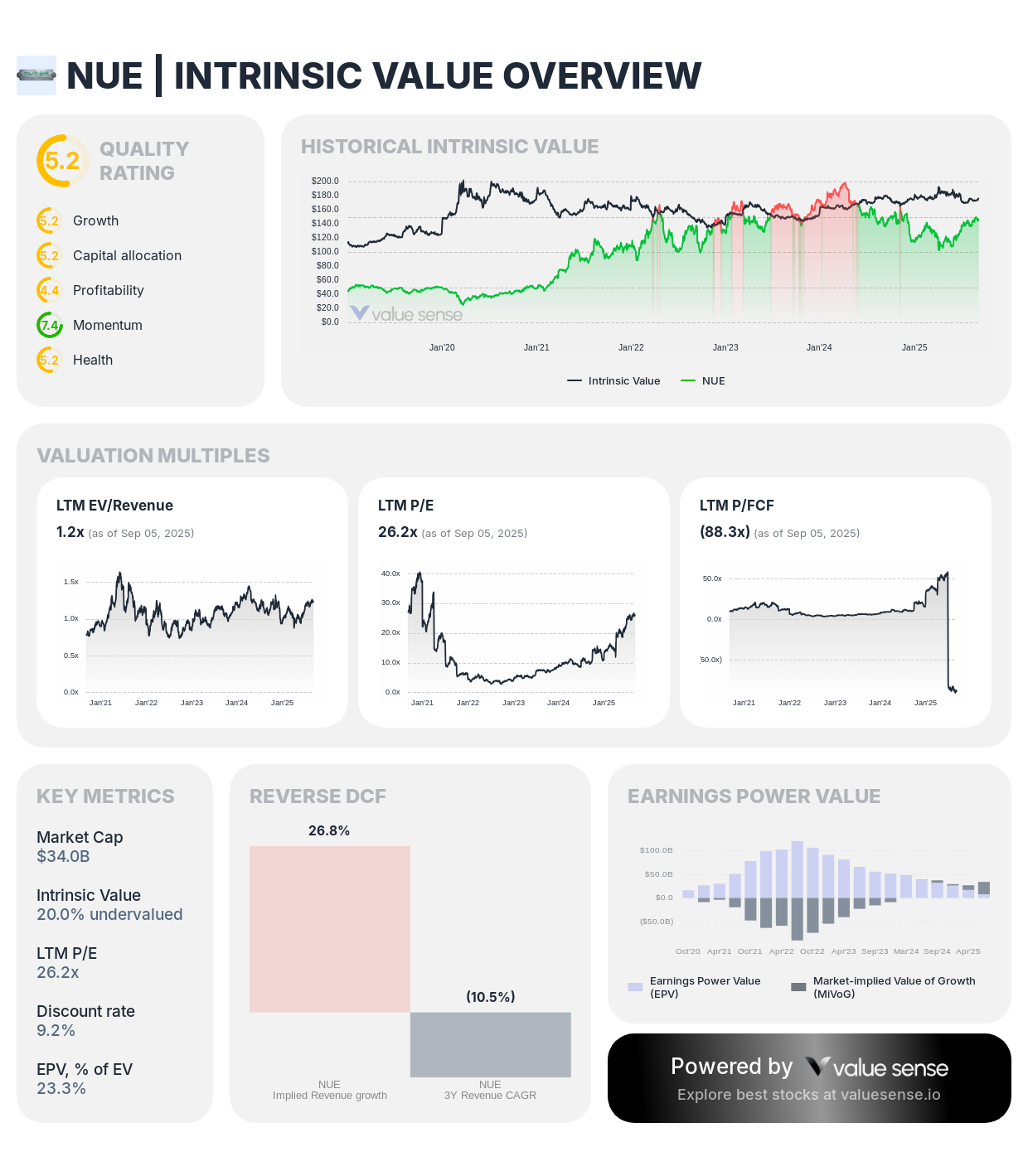
Nucor shows 20.0% undervaluation with steady revenue growth and positioning for infrastructure construction demand
Company Profile: Nucor operates as North America's largest steel producer and recycler, manufacturing steel products for construction, automotive, and industrial applications.
Value Proposition:
Modest Undervaluation: 20.0% below intrinsic value
Quality Rating: 5.2/10 with cyclical business characteristics
Market Cap: $34.0 billion in leading steel producer
Revenue Growth: Steady 5.8% expansion
Investment Thesis: NUE provides essential steel products for infrastructure construction while maintaining cost advantages through electric arc furnace technology and scrap steel recycling. Infrastructure spending acceleration and nearshoring trends support sustained steel demand.
Key Catalysts:
Infrastructure Construction: Government spending drives steel demand for bridges, buildings, and transportation
Manufacturing Reshoring: Domestic production trends favor North American steel suppliers
Technology Advantages: Electric arc furnaces provide cost and environmental benefits
Market Leadership: Dominant position enables pricing power and market share maintenance
Operational Considerations:
Revenue: Strong growth from infrastructure and construction demand
Cyclical Nature: Steel pricing volatility affects profitability
Environmental Benefits: Recycling capabilities align with sustainability trends
Capital Allocation: Disciplined investment approach maintains competitive advantages