

Undervalued Energy Stocks for September 2025
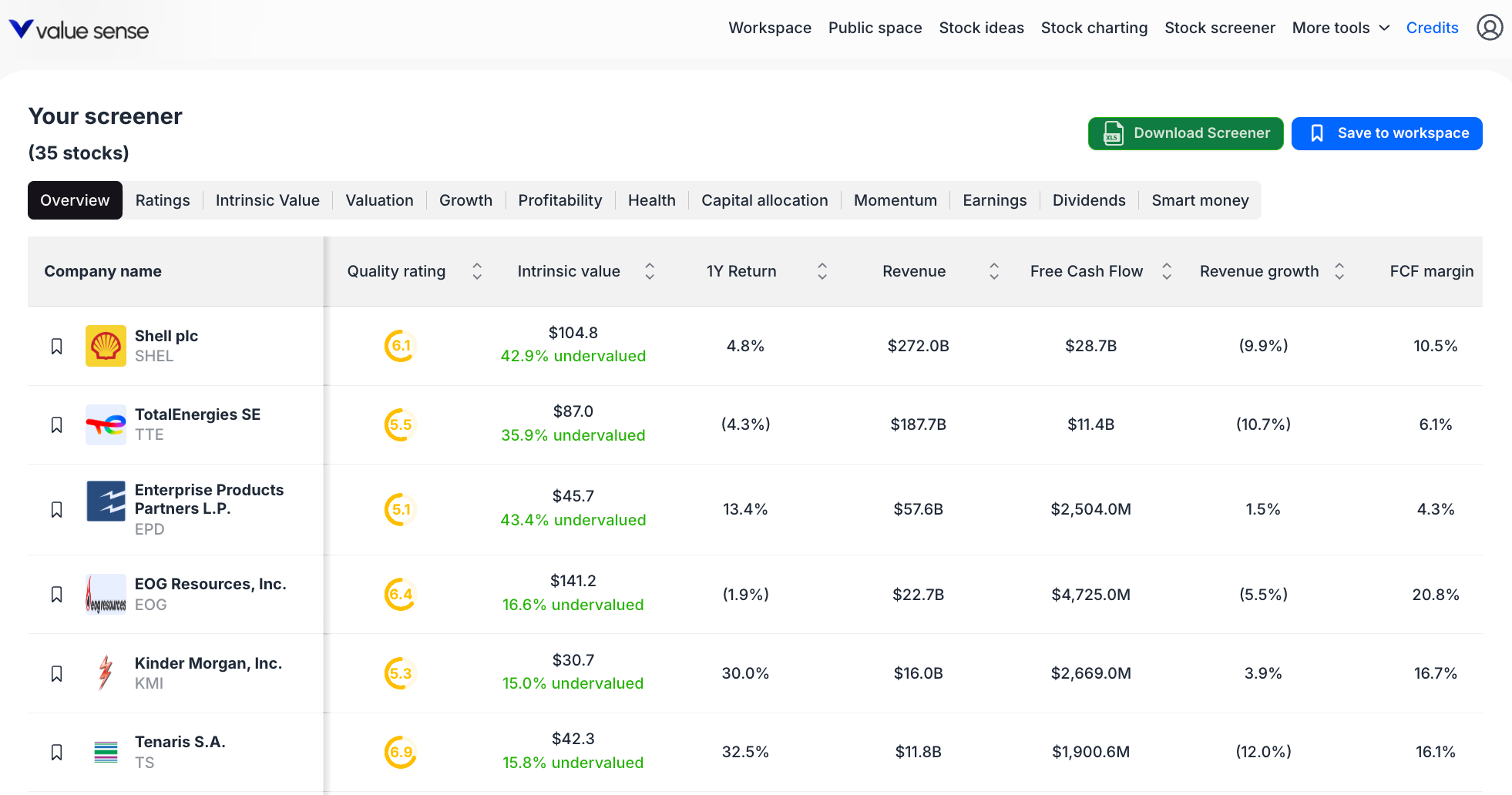
6 Oil & Gas Value Plays Worth Your Attention

The energy sector has been a rollercoaster ride for investors, but smart money knows that volatility creates opportunity. As we head into September 2025, several oil and gas companies are trading at compelling valuations that savvy value investors shouldn't ignore.
After analyzing comprehensive financial metrics across multiple valuation frameworks, we've identified six energy stocks that appear significantly undervalued. These aren't speculative plays – they're established companies with strong fundamentals, healthy cash flows, and trading prices that don't reflect their intrinsic worth.
→ Stock Screener — Value Energy Stocks ←
Why Energy Value Investing Makes Sense Now
The energy landscape has fundamentally shifted. Companies have learned to operate efficiently at lower oil prices, prioritize shareholder returns, and maintain disciplined capital allocation. This transformation has created a new breed of energy companies that generate substantial free cash flows even in challenging environments.
Current market conditions present a unique opportunity. While many investors remain skeptical about oil and gas investments due to ESG concerns and transition risks, this sentiment has pushed valuations to attractive levels for those willing to look beyond the headlines.
Our Top 6 Undervalued Energy Stocks for 2025
1. Shell plc (SHEL) - The Dividend Aristocrat Trading at Deep Discount
Shell stands out as perhaps the most compelling value proposition in our analysis. With a massive $272 billion in revenue and $28.7 billion in free cash flow, this energy giant is firing on all cylinders.
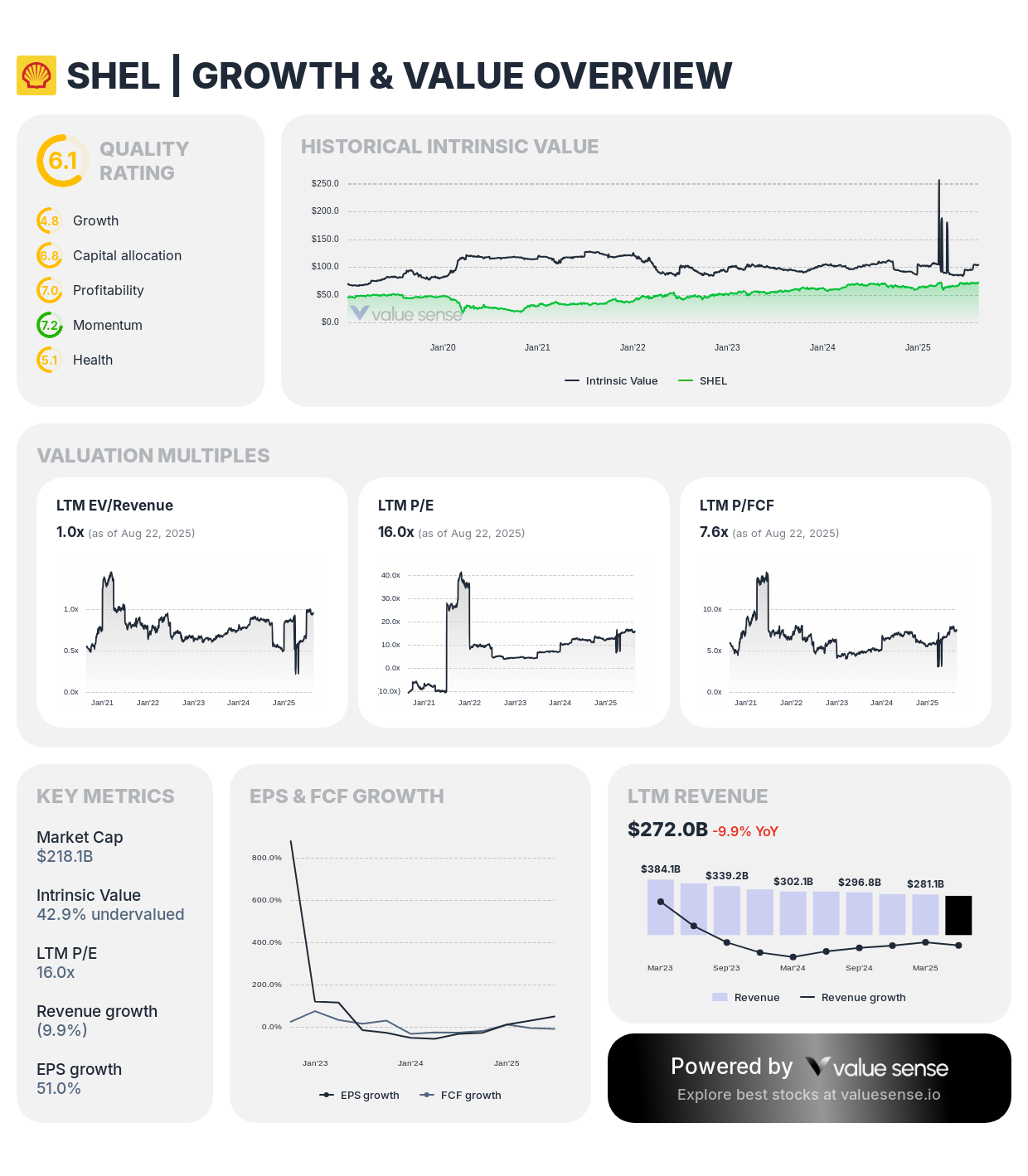
What makes Shell attractive:
Trading 42.9% below calculated intrinsic value
Impressive 10.5% free cash flow margin
Strong 13.2% FCF yield provides excellent income potential
Reasonable debt levels with 41.3% debt-to-equity ratio
Diversified energy portfolio including renewables and LNG
The company's Ben Graham revised fair value analysis suggests it's trading at a staggering discount, making it a cornerstone holding for value-oriented portfolios.
→SHEL intrinsic value analysis
2. TotalEnergies SE (TTE) - European Energy Champion
TotalEnergies combines the stability of an integrated oil major with strategic positioning in the energy transition. At $187.7 billion in revenue, it's a formidable player trading below fair value.
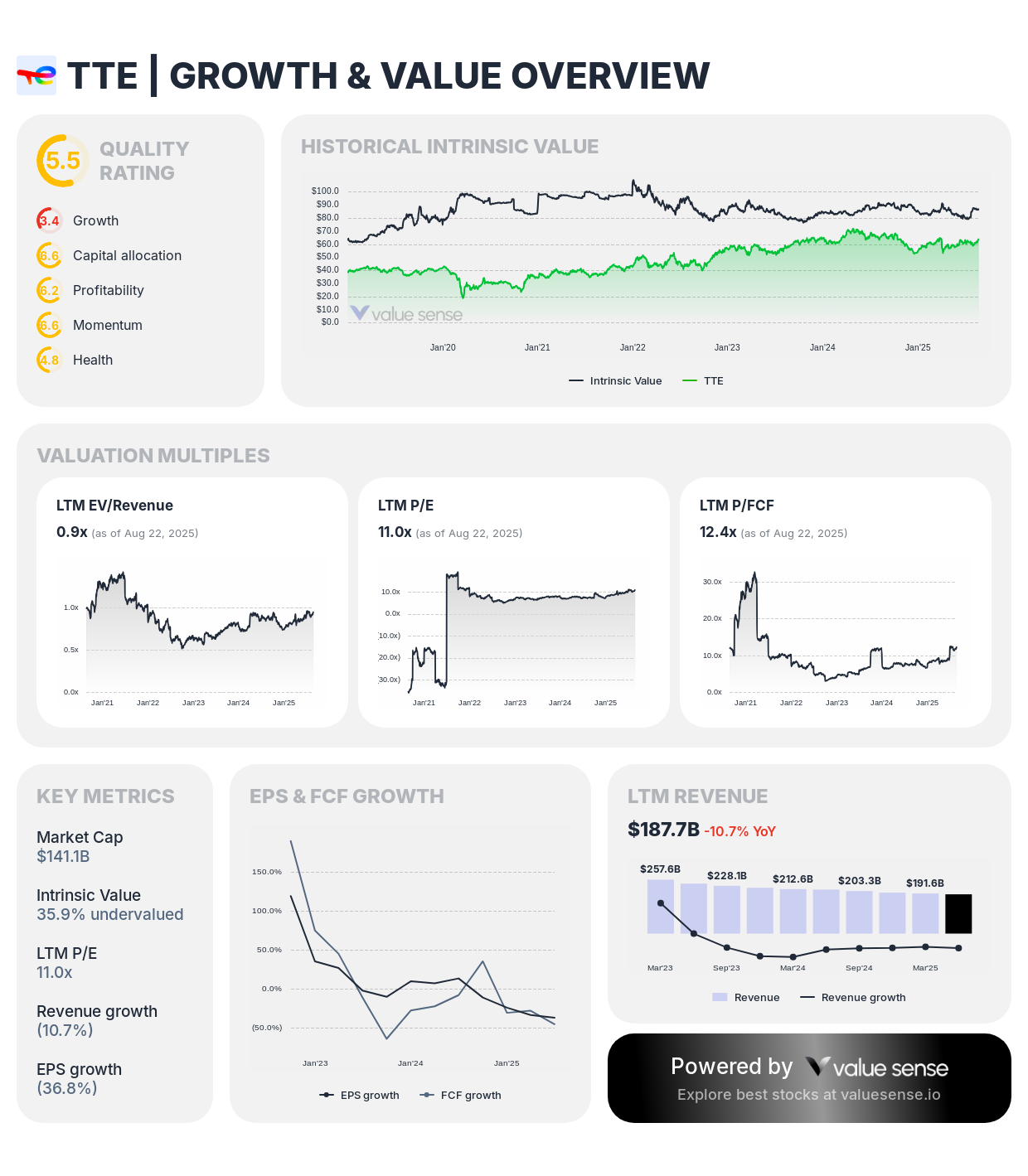
Key investment highlights:
35.9% undervalued based on intrinsic value calculations
Solid 6.1% FCF margin with $11.4 billion in free cash flow
Attractive 8.1% FCF yield
Conservative 52.3% debt-to-equity ratio
Leading European position in renewable energy investments
3. Enterprise Products Partners L.P. (EPD) - The Midstream Monster
This master limited partnership operates critical energy infrastructure, providing stable cash flows regardless of commodity price volatility.
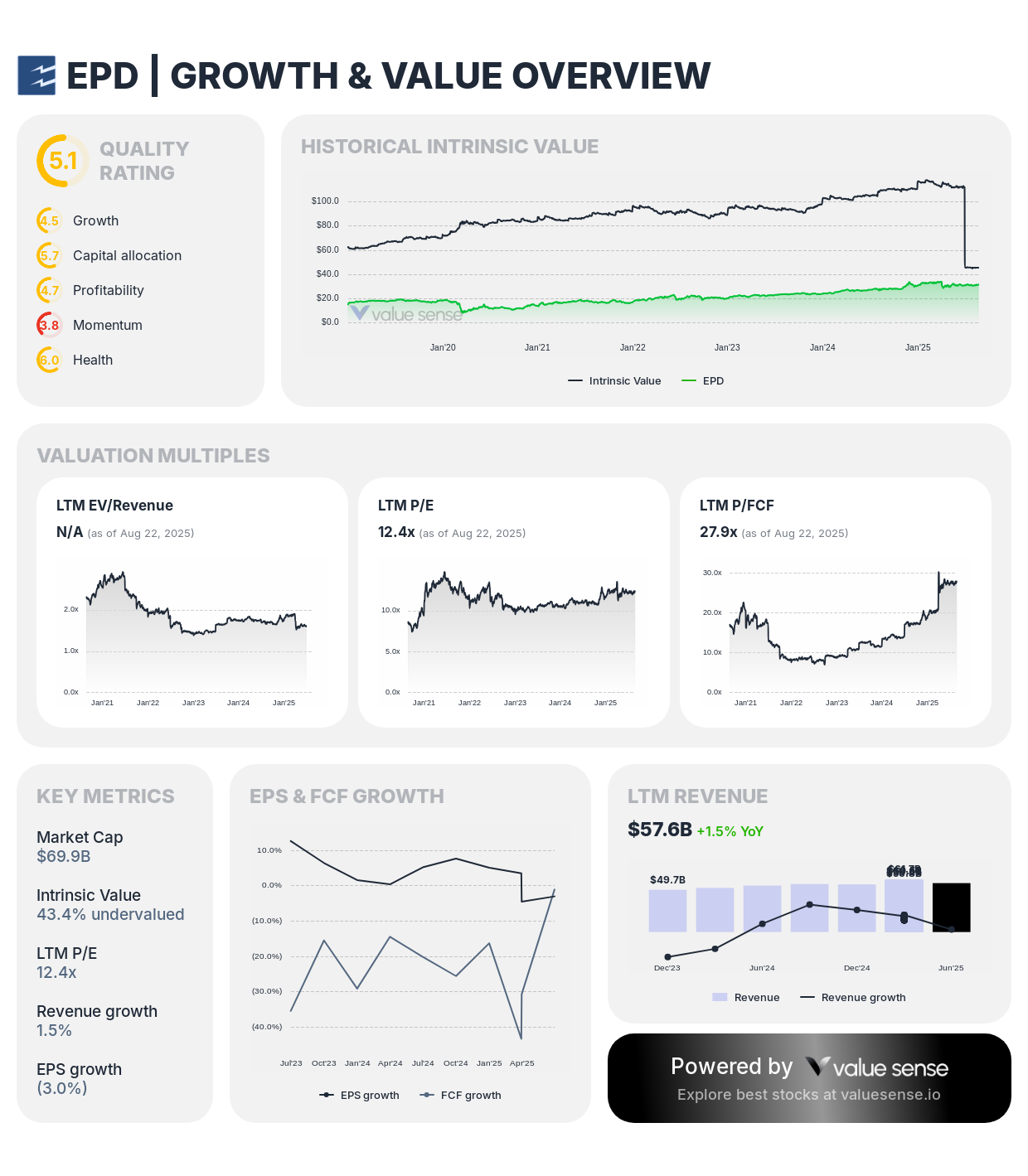
Investment case:
Deep 43.4% discount to intrinsic value
Exceptional $2.5 billion in free cash flow from $57.6 billion revenue base
Modest 4.3% FCF margin reflects capital-intensive nature but strong absolute returns
Minimal debt concerns with partnership structure
Essential midstream assets with long-term contracts
4. EOG Resources, Inc. (EOG) - The Shale Pioneer
EOG Resources has mastered the art of profitable shale production, maintaining strong returns across various oil price environments.
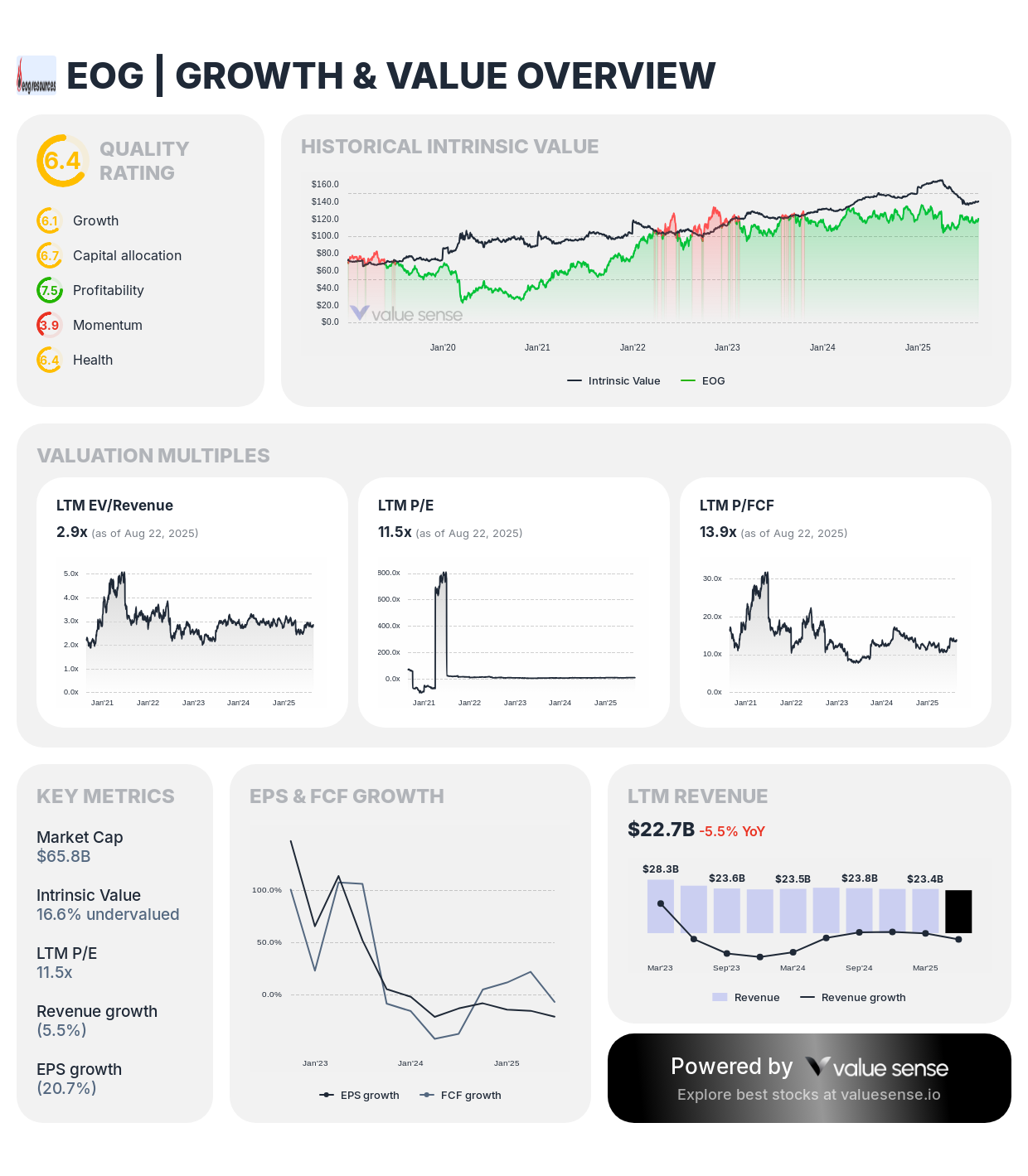
Why EOG deserves attention:
Quality rating of 6.4 indicates strong financial health
Impressive 20.8% FCF margin demonstrates operational efficiency
$4.7 billion free cash flow from $22.7 billion in operations
Conservative 15.7% debt-to-equity ratio
Premium shale acreage in proven basins
→ EOG intrinsic value analysis
5. Kinder Morgan, Inc. (KMI) - Infrastructure Play with Upside
As North America's largest natural gas pipeline operator, Kinder Morgan provides essential energy transportation services.
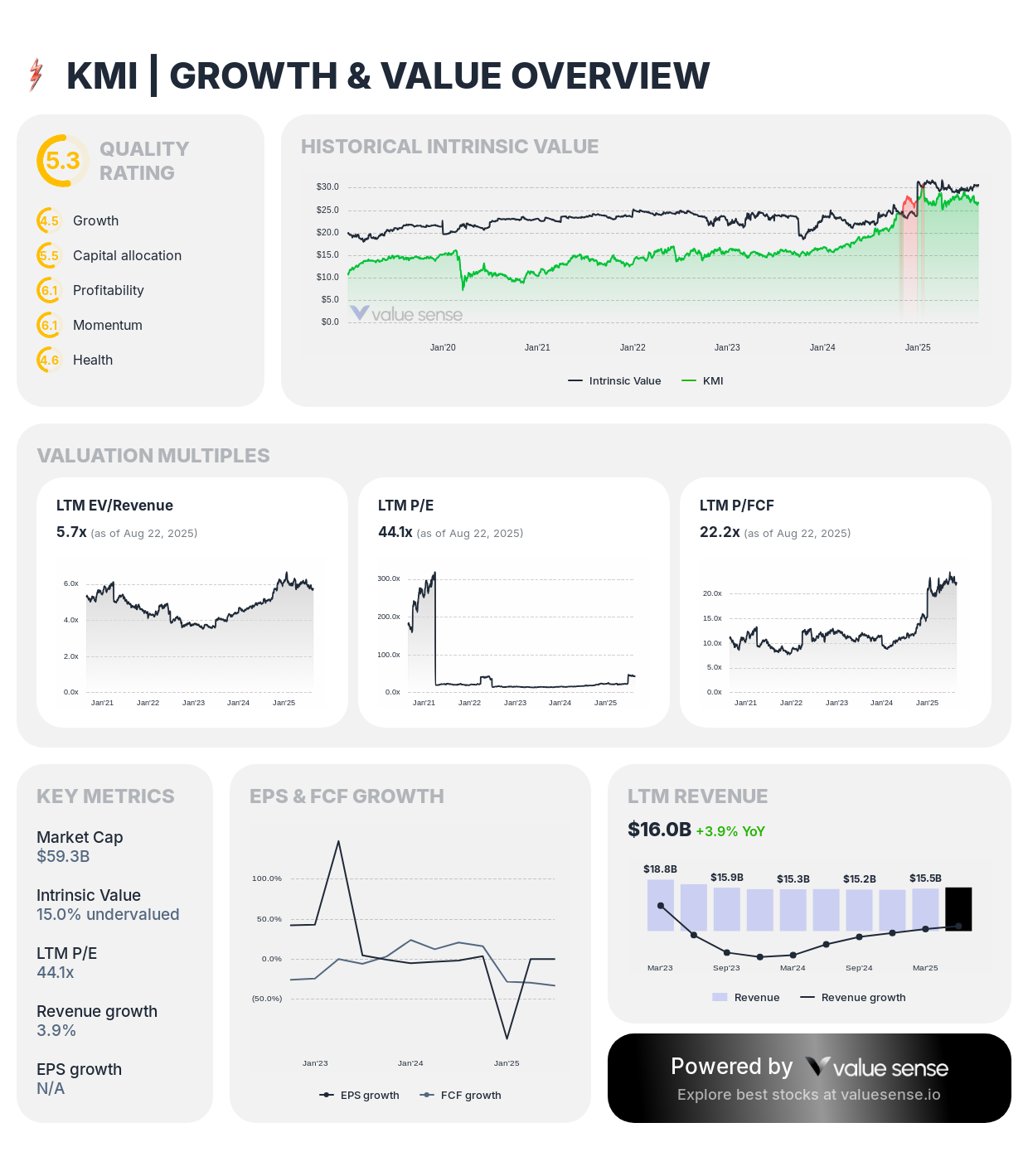
Investment merits:
15.0% undervalued according to intrinsic value analysis
Strong 30.0% one-year return demonstrates market recognition
Substantial 16.7% FCF margin
$2.7 billion in free cash flow provides steady income potential
Regulated utility-like business model reduces commodity exposure
→ KMI intrinsic value analysis
6. Tenaris S.A. (TS) - The Steel Tube Specialist
This Argentine company manufactures steel tubes for the energy industry, benefiting from increased drilling activity.
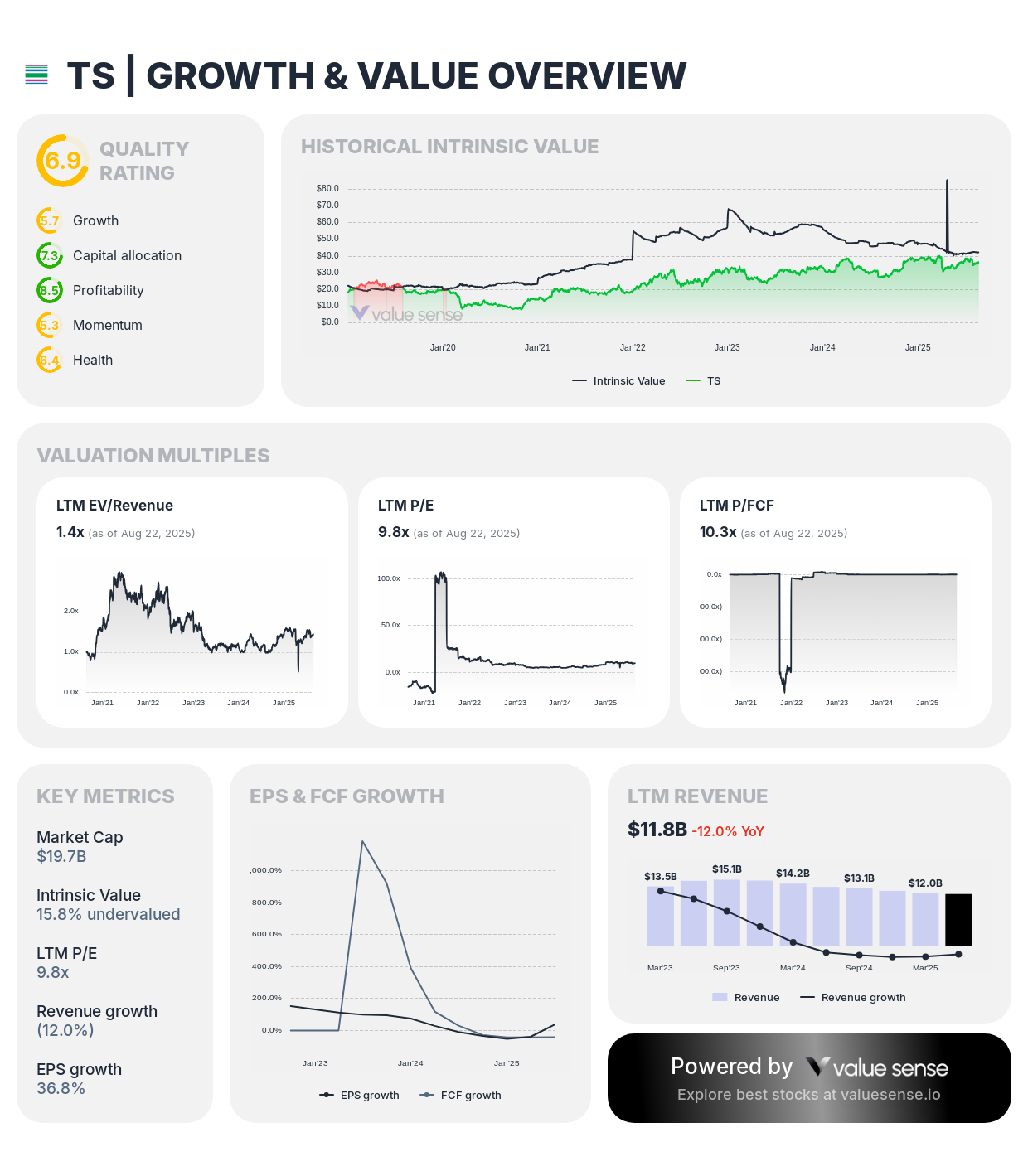
Compelling factors:
Attractive 15.8% discount to intrinsic value
Impressive 32.5% one-year return showing momentum
Strong 16.1% FCF margin
Ultra-low 2.8% debt-to-equity ratio provides financial flexibility
Global footprint serving major oil producers
The Bottom Line on Cheap Oil Stocks
The current environment has created genuine value opportunities in the energy sector. These six companies demonstrate strong fundamentals, conservative balance sheets, and trading prices that don't reflect their intrinsic worth.
While energy investing isn't without risks, the combination of improved operational efficiency, disciplined capital allocation, and attractive valuations makes a compelling case for selective exposure to undervalued energy stocks.
Smart investors understand that the best opportunities often emerge when sectors fall out of favor. For those willing to look past short-term headlines and focus on long-term fundamentals, these energy value plays deserve serious consideration.
Remember, successful energy value investing requires patience, diversification, and a clear understanding of the risks involved. But for investors who get it right, the current setup could deliver substantial returns as these undervalued companies realize their full potential.
Excellent value analysis! I particularly appreciate the detailed breakdown on TotalEnergies - the 35.9% discount to intrinsic value is compelling, especially when combined with their 8.1% FCF yield. What stands out to me is their strategic positioning in the energy transtion while maintaining strong traditional operations. The conservative 52.3% debt-to-equity ratio provides financial flexibility for their renewable energy investments. Among the European majors, TTE's balanced approach between shareholder returns and long-term transition strategy seems well-calibrated for the current market environment.